Phone:
(701)814-6992
Physical address:
6296 Donnelly Plaza
Ratkeville, Bahamas.

Phone:
(701)814-6992
Physical address:
6296 Donnelly Plaza
Ratkeville, Bahamas.
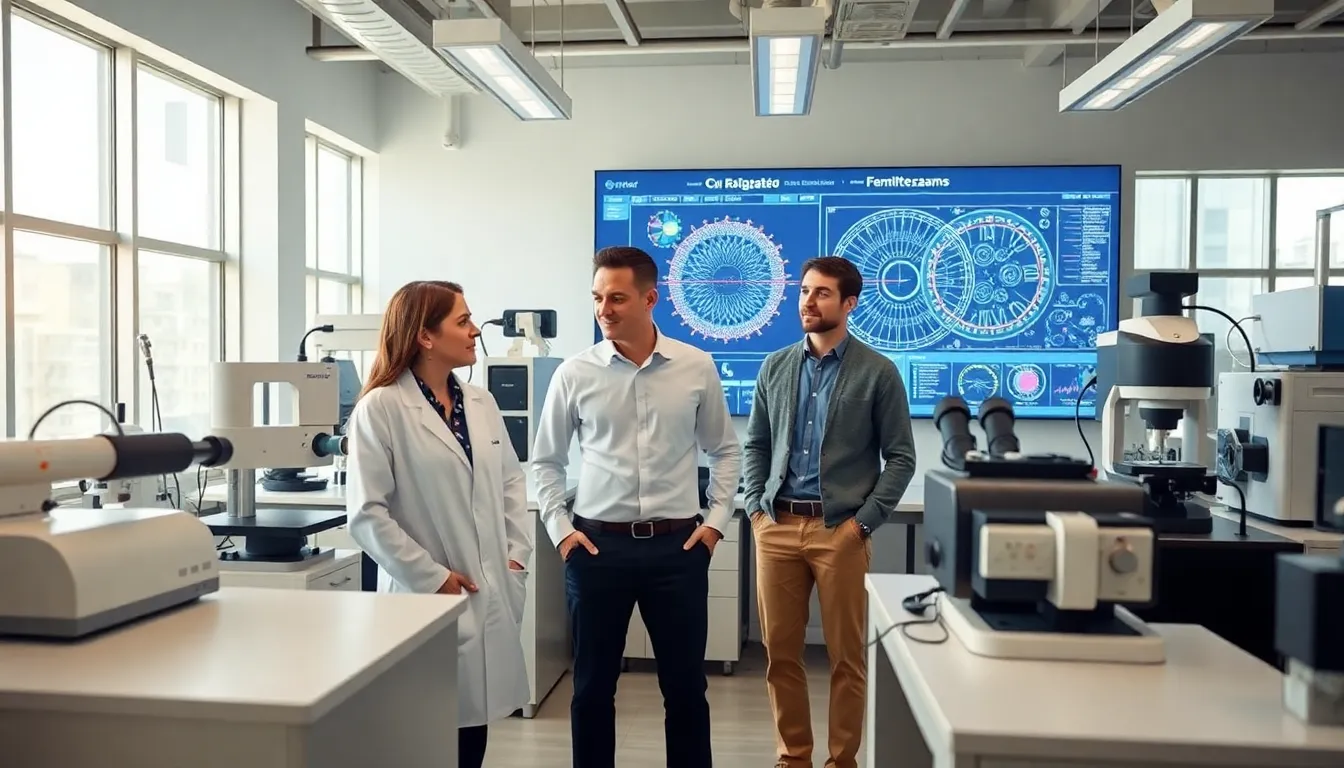
Ever wondered what happens when you take something microscopic and turn it into a groundbreaking concept? Welcome to the world of femtozaćma. It may sound like the name of a secret society or a complex potion from a fantasy novel, but fear not: it is a genuine and fascinating idea with real-world implications. As science pushes the boundaries of understanding, femtozaćma has emerged from the depths of academic obscurity into the spotlight of technological innovation. So, buckle up as we investigate into this enthralling topic, uncovering its history, current applications, and future directions. Trust us, it’s going to be a thrilling ride.

Femtozaćma is a concept that combines the prefixes “femto-” and “za” to define phenomena or entities at an incredibly small scale. The term stems from the femtometer scale, representing one quadrillionth of a meter. This minuscule dimension highlights the precision required in quantum mechanics and fields like nanotechnology. In essence, femtozaćma refers to structures or behaviors at the femtometer level, underscoring a new layer of understanding in scientific discussions.
This concept isn’t just theoretical: it has practical implications that could change the landscape of various fields. Scientists are exploring its application in areas such as materials science and biophysics, proposing that understanding femto-level phenomena may lead to breakthroughs in technology and medicine.
The journey of femtozaćma started in the late 20th century, aligning closely with advancements in particle physics and quantum mechanics. Originally, researchers were focused on understanding fundamental particles like quarks and gluons, which play a significant role at the femtometer scale. Over the years, as scientific methods advanced, a deeper comprehension of atomic nuclei and their components became possible.
The pivotal moment came with the development of high-energy particle colliders. These complex machines provided researchers the tools to explore interactions at the femtometer level, pushing the boundaries of what was thought to be achievable. As a result, femtozaćma emerged as a useful term in scientific discourse, capturing the imagination of researchers across various disciplines.
Femtozaćma is not only a theoretical exploration: it has tangible applications that are making waves across industries. One prominent area is in materials science, where understanding structures at the femtometer level can lead to the development of new materials with unprecedented properties.
Grasping the science behind femtozaćma allows researchers to manipulate materials at an atomic level. By exploring how atoms behave and interact at such small scales, scientists can tailor materials for specific functions, potentially revolutionizing technology. For instance, lightweight and incredibly strong materials could emerge from advanced understanding of femto-level interactions, paving the way for innovations in aerospace, construction, and electronics.
Also, in biophysics, femtozaćma can enhance our understanding of biological processes. By evaluating molecular behaviors at femtometer scales, researchers can shed light on mechanisms of diseases or improve the efficacy of drug development.
The pursuit of femtozaćma has been propelled by various technological innovations that have refined research methods and increased our ability to measure and manipulate at femtometer scales. High-resolution imaging techniques, such as atomic force microscopy (AFM) and scanning tunneling microscopy (STM), are essential tools that have facilitated the exploration of materials at unprecedented levels of detail.
Also, computational advancements in simulating quantum interactions have made it feasible to predict the behavior of materials and particles at femto-scale distances. Researchers can now model atomic interactions with remarkable accuracy, bridging the gap between theoretical physics and practical applications. Such innovations not only advance academic understanding but also enable industries to harness this knowledge for real-world applications.
Even though its promising potential, femtozaćma is not without its challenges. One significant barrier is the complexity of conducting experiments at such minuscule scales. Measuring phenomena at the femtometer level necessitates sophisticated technologies, which can be prohibitively expensive and technically demanding.
Also, the inherent uncertainty in quantum mechanics introduces complications when trying to predict the exact behavior of particles at this scale. Researchers often find themselves navigating through a maze of probabilities rather than certainties, making it tough to draw concrete conclusions. Such limitations can slow down the pace of research and hinder application in practical scenarios.
Looking ahead, the future of femtozaćma research appears promising yet challenging. Enhancements in experimental technology and computational methods will likely propel the field forward, unlocking new possibilities in both theoretical and practical applications. Interdisciplinary collaborations across physics, materials science, and biology are essential for tackling the complexities associated with femto-level phenomena.
Also, as industries seek greener and more efficient technologies, femtozaćma could play a role in developing sustainable materials or powering the next generation of electronics. By tapping into the principles of femto-level interactions, researchers may unlock solutions that were previously thought impossible, revolutionizing how we understand and interact with the material world.